
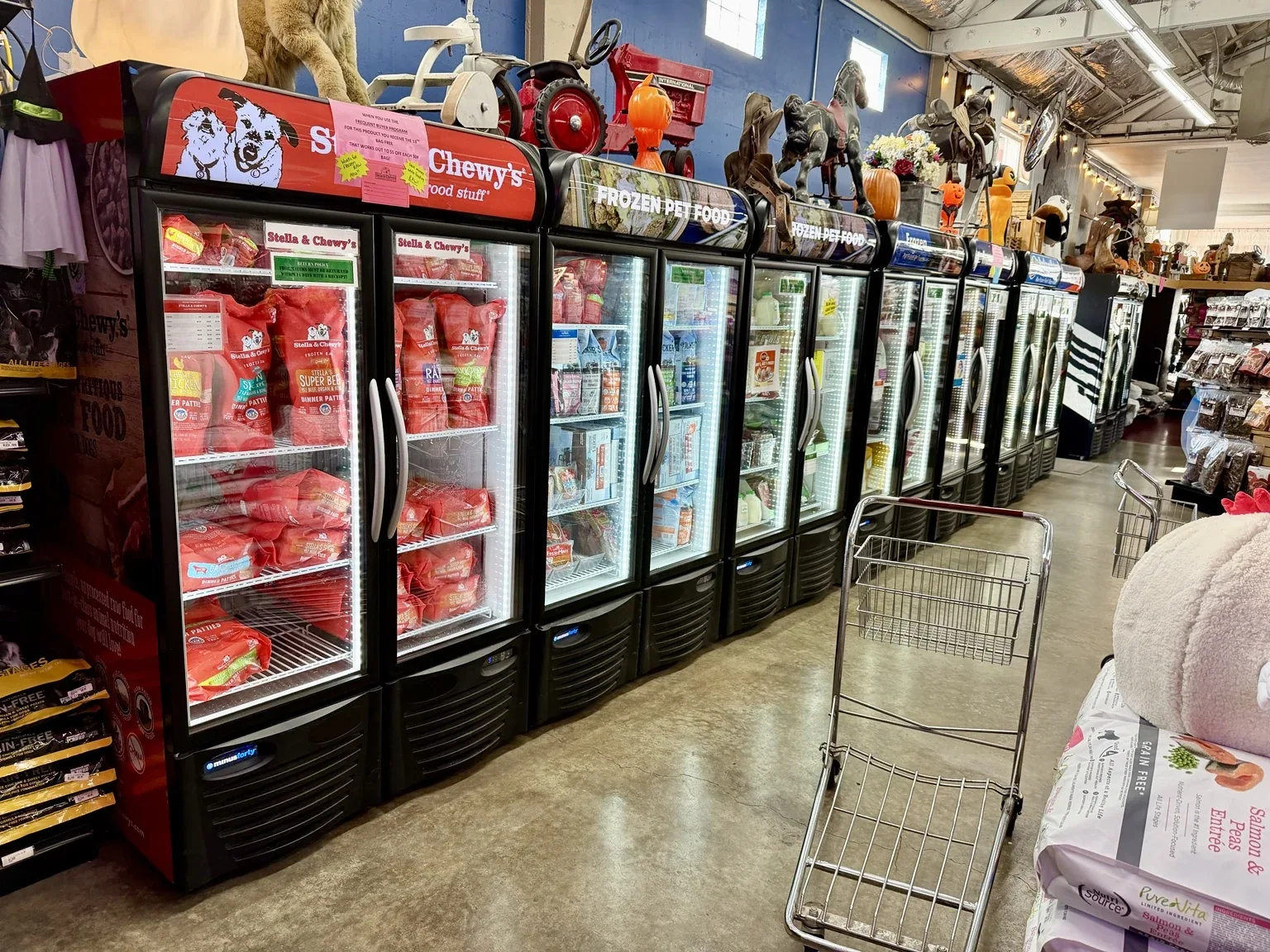
Start with the bowl.
Find the root cause.
We’ve helped itchy-dog families for years by looking closely at everything the dog eats, removing the likely problem ingredients and helping the body settle down.
Look at what goes in the bowl.
When an itchy dog walks through the door, our first conversation is usually about everything that dog is eating—not just the food in the bowl.
At McKenzie Feed, we pay particular attention to corn, wheat and soy when a dog is struggling with recurring itch. We don’t stock dog or cat foods containing those ingredients, and we don’t stock foods with by-product meals.
The details matter. Treats, chews, table scraps and “just one bite” all count when you are trying to remove the source of the problem.
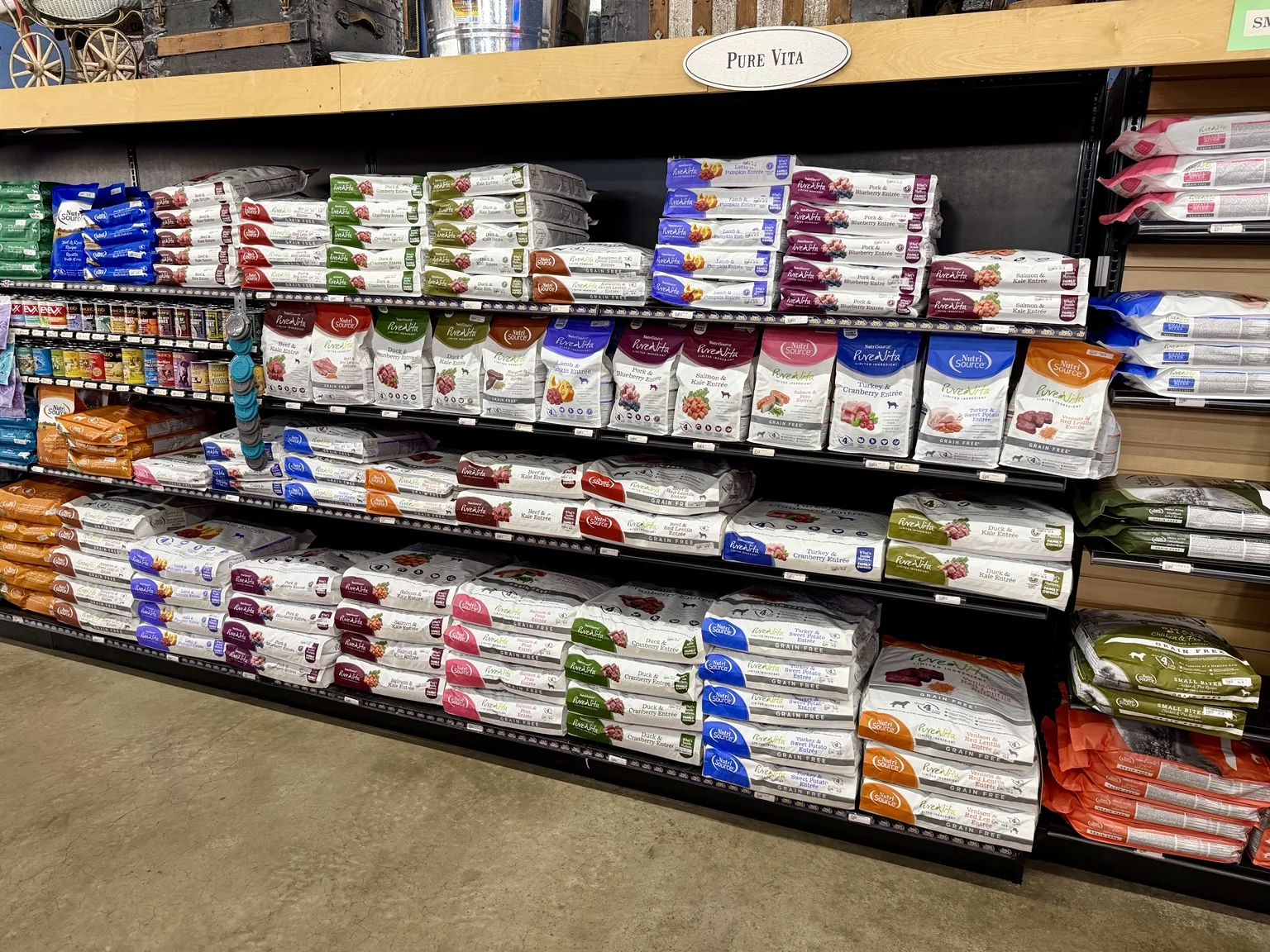
Big sweeping strokes first.
We like to make one clear, meaningful change instead of tweaking five tiny things and wondering what mattered. Very often, changing the food and treats is enough to get an itchy dog moving in the right direction quickly.
1. Change the big stuff
Food, treats and chews come first. We remove the most likely problem ingredients all at once so the dog has a clean starting point.
2. Watch for improvement
Many customers notice the intense itching and aggravated redness begin settling first. From there, we want to see steady improvement week by week.
3. Dig deeper if needed
If the dog is not clearly improving after three to four weeks, then we look harder at the smaller details and other possible causes.
A phone photo of the label is perfect.
Bring the current food bag—or a clear phone photo of the front and ingredient panel. Tell us about treats, chews, table scraps, supplements and anything else they get. We can compare it to the foods on our shelves and build a simple, practical plan.
Popcorn is corn. A few kernels on movie night still count. The last bite of a sandwich may look harmless, but the bread is wheat. Gas-station biscuits, coffee-stand dog treats and treats from friends all need to be part of the conversation. When you are trying to find the source of the problem, consistency matters.
Why start with food?
Because everything the dog eats is something we can identify, simplify and control. It gives us a practical place to start the conversation and a way to learn from what happens next.
Why don't you carry corn, wheat or soy foods?
We leave corn, wheat and soy out of our dog- and cat-food assortment because we believe they can be problem ingredients for some itchy pets, and removing them makes diets easier to simplify. Food allergies can involve many ingredients—especially proteins—so we also look closely at the protein source and everything else the pet eats. We also avoid by-product meals in the foods we stock.
How long until I can expect results?
We want to see the dog continually and gradually getting better. Heavy itching and aggravated redness are often the first things customers notice settling down once a problem food is removed; skin and coat recovery takes longer, and hair may take weeks to begin filling back in. If there is not clear improvement after three to four weeks, we look deeper and make the next change. Severe, infected, persistent or worsening skin problems should be evaluated by a veterinarian.
Bring us the bag—or a picture of it.
We'll help you compare what you feed now with practical options on our shelves.
Come talk to us